Showing posts with label legal philosophy. Show all posts

16 March 2022

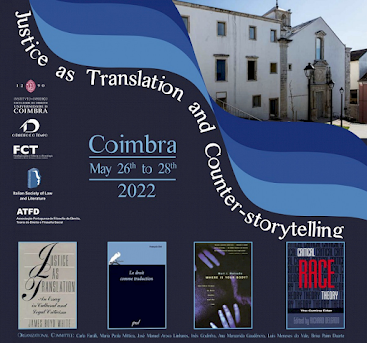
Justice as Translation and Counter-story Telling


Justice as Translation 

and Counter-storytelling 

Coimbra, Mai 26th to 28th 2022 

The Colloquium is jointly organized by UCILeR (Instituto Jurídico da Faculdade de Direito da Universidade de Coimbra—University of Coimbra Institute for Legal Research) , ISLL (Italian Society for Law and Literature) and ATFD (Associação Portuguesa de Teoria do Direito, Filosofia do Direito e Filosofia Social, the Portuguese section of IVR) 


Organizational Committee: 

Carla Faralli, Maria Paola Mittica, Alessandro Serpe, José Manuel Aroso Linhares, Inês Godinho, Ana Margarida Gaudêncio, Luís Meneses do Vale, Brisa Paim Duarte

In a well-known passage from The Narrative Paradigm (Communication Monographs, vol. 52, 1985, p. 350), Walter Fisher argues that “narrative rationality”, since it “celebrates human beings” as “storytellers”, should be treated as an “attempt to recapture Aristotle’s concept of phronesis”. It is this central topos in the contemporary rehabilitation of practical thinking (projected in Law’s specific practical world) that our Colloquium will explore, whilst paying attention to the plurality of approaches it allows. Its title establishes actually an immediate counterpoint between two polarized assimilation modes

1) On one hand we have the so-called paradigm of translation, not only in the general version that we owe to MacIntyre's communitarian narrativism ─ exploring the possibilities of dialogue between traditions (notwithstanding the impossibility of an equidistant tertium comparationis) ─ but also in the specific projections that James Boyd White (justice as translation) and François Ost (le droit comme traduction) exemplarily open: the first highlighting a kind of a permanent movement (from ordinary language to legal language, and from legal language back to ordinary language) ─whilst exploring narrative as the archetypal form of praxis and practical thinking and whilst conceiving of Law as “a set of occasions and opportunities for the creation of meaning” (“a rather fragile piece of our culture, requiring those who live with it to remake it constantly, over and over”) ─, the second autonomizing three indispensable thematic cores and the exercises in translation that they demand, namely, the one which is required by the plural network of (national and international, state and non-state) legal orders, the one which the judge’s modus operandi (interconnecting the world of practical controversies and legal materials) manifests and, last but not least, the one which this same judge develops whilst assuming his/her role as third (“le tiers qui triangule le différend opposant les parties [et qui traduit] (…) leurs discours dans le langage de la loi commune”) ─ without forgetting that this thirdness (also as a fonction tièrce “internalized by legal subjects”) is precisely the feature which distinguishes Law, its discourses and practices (Le droit ou l’empire du tiers). 

2) On the other hand, we have the blossoming of a wide range of discourses on marginalised identities (sometimes even on marginalised bodies), the core of which is undoubtedly composed of narrative outsider jurisprudences and community-building counterstorytelling (to use the well-known formulae proposed respectively by Mari J. Matsuda and Richard Delgado). This remarkable multiplication of perspectives and academic fields (going from Feminist Jurisprudences to Critical Philosophy of Race and from LGBT-GNCCrits to Postcolonial Legal Theory) — which were opened up with the so-called third Critical Legal Scholar’s generation and go on developing a search for community or communities flowing out in the experience of incommensurable forms of life (involving gender, race, sexual orientation, economic condition, social status, practical-cultural and geopolitical provenance, health, mental and physical disability, etc) — pose certainly specific problems ─concerning the “standards” which should be used to evaluate the different uses of narrative resources (and the merits of the nfinal outcome), the challenges of intersectionality or intersectional persons (overlapping diverse identities), as well as the risk of transforming more or less persuasive counterstories into stereotyped narratives (with characters and roles that are implacably pre-determined). They offer however also an unique opportunity to discuss Law’s and legal theory’s claims to comparability. Is in fact the fragmentation of meanings, semantic values and performative models provoked (or aggravated) by those approaches compatible with the claim for an integrating context (and its tertium comparationis) or does, on the contrary, this fragmentation (in its narrative intelligibility) prevent or frustrate the attempt to recognise an authentic inter-discourse and, with this, the aspiration to treat law as the “empire” of thirdness? 

Participants are invited to explore both these lines of development and their internal possibilities, as well as to discuss their reciprocal intertwinement and their dialectical tensions, which means also projecting them in specific contemporary societal challenges, such as those which involve the morality of political correctness, the juridical relevance of hate speech, the digitization of life, the climate justice (or the climate emergency), the biopolitics of human and trans-human. 

Abstracts of 300 words (max.) should be submitted by April 18th 2022 to José Manuel Aroso Linhares (linhares@fd.uc.pt) and Ana Margarida Gaudêncio (anagaude@fd.uc.pt) with participation decisions made by April 26 th. Selected papers will be invited for publication. For communication reasons it is strongly recommended English as working language. However, communications in Castilian, French, German, Italian and Portuguese are also possible (provided they are always accompanied by an abstract in English). 

We intend to hold the conference as a full “in-person”, eventually as a hybrid event. The preference concerning the participation mode should be clarified in the e-mail which sends the abstract. 

Registration period: from 27 th April to 9 st Mai 2022 

The basic registration fee* (concerning “in person” presentations) is 30€ (for professionals) and 20 (for students. including PhD candidates). Other possibilities (involving a guided tour and a dinner) will be clarified later. The information concerning payment possibilities will be available a week before the beginning of the registration period. 

 *Basic registration fee includes the roundtable materials and the coffee breaks.

10 October 2016

FELLOWSHIP ON LEGAL PRAGMATISM AND REALISM


Call for Applications
Perelman Centre for Legal Philosophy
FELLOWSHIP ON LEGAL PRAGMATISM AND REALISM

The Perelman Centre for Legal Philosophy of the Université Libre de Bruxelles is calling
for applications for an 8 months full time Fellowship on Legal Pragmatism & Realism
in the framework of the Twining Llewellyn Fund.
1. FELLOWSHIP OF THE NATIONAL FUND FOR SCIENTIFIC RESEARCH
The fellowship will unfold as part of a research program sponsored by the Belgian
National Fund for Scientific Research. It has two key objectives. First, it aims at starting a
PhD research on legal pragmatism and realism focusing on the material of the Twining
Llewellyn Fund. Second, it seeks to facilitate the reception of the Twining-Llewellyn
collection at the Perelman Centre and to make it fit for public consultation. This involves
working hand in hand with different services at the ULB (library, archives, etc.) for
cataloguing, referencing and setting up online and onsite consultation services.
The fellowship position is initially available for 8 months (November 1, 2016 – June 30,
2017- see more below), during which the fellow will be enrolled as a doctoral student at
the Université Libre de Bruxelles. After such a period, the Perelman Centre may offer the
fellow the possibility to continue writing the doctoral dissertation. This offer is subject
to availability of funds and positive evaluation of the fellowship period.
2. TWINING- LLEWELLYN FUND
Karl Nickerson Llewellyn (1893-1962) was a preeminent American legal scholar based
at the University of Chicago who is particularly known for advancing the Realist
Movement of legal thought, and for his involvement in the development of the Uniform
Commercial Code. William Twining (1934-) is a British legal theorist and founder of the
Law in Context Movement. His contributions span across jurisprudence, evidence and
proof, legal method, and legal education. He is a leading scholar on the subject of legal
theory and globalization. William Twining made a significant donation of his personal
library to the Perelman Centre which includes (1) a shadow version of the Llewellyn
collection at Chicago, (2) The Soia Mentschikoff shadow collection; (3) a personal
collection of books owed by William Twining on American jurisprudence, realism,
globalisation and Jeremy Bentham, and (4) William Twining’s material, which
encompasses some of his academic correspondence, annotated material, and his
published and unpublished works.
3. REQUISITES
Applicants must hold a Master’s degree (120 ECTS) or equivalent, preferably in law. The
selection committee will evaluate on a case-by-case basis the eligibility of applicants
holding a Master’s degree in other disciplines than law. Applicants who already hold a
PhD are not eligible. Special consideration will be given to applicants with an
international academic profile and excellent academic results.
We are looking for enthusiastic candidates with aptitude for academic research,
collective research and teamwork. Candidates must be fully fluent in written and oral
English, and have good management and IT skills. Professional experience is not
required but can constitute a valuable asset in the application.
Contract start date 1/11/2016
A later starting date is possible. However, the end date of the contract will not change (30
June 2016). Please indicate in your application when will you be available to take up the
position.
Contract duration and salary
Eight-month scholarship. The grant amounts to around €1800 net.
Application
Applications must be sent to the Director of the Perelman Centre, Prof. Isabelle Rorive
(philodroit@ulb.ac.be). Please write as email subject “Fellowship vacancy – Candidate
your surname”.
Deadline for receiving applications is 20 October 2016. Shortlisted candidates will be
contacted for an interview.
The application must include the following documents:
• Applicant CV
• Motivation letter
• The candidate’s master thesis or, eventually, a paper written in the
framework of his/her studies.
The Perelman Centre for Legal Philosophy: For more information regarding the
framework of his/her studies.
Perelman Centre and its activities please visit the website www.phildroit.be

21 November 2014

SSRN ARTICLE ANNOUNCEMENT: Law and Society in Brazil at the Crossroads: A Review

We suggest some interesting articles from SOCIAL & POLITICAL PHILOSOPHY eJOURNAL, Vol. 7, No. 155: Nov 19, 2014. Please click here to view the full full abstracts for this issue.

TAMIR MOUSTAFASimon Fraser University (SFU)
Email: tmoustafa@sfu.ca
Once regarded as mere pawns of their regimes, courts in authoritarian states are now the subject of considerable attention within the field of comparative judicial politics. New research examines the ways in which law and courts are deployed as instruments of governance, how they structure state-society contention, and the circumstances in which courts are transformed into sites of active resistance. This new body of research constitutes an emergent field of inquiry, while simultaneously contributing to a number of related research agendas, including authoritarian durability and regime transition, human rights, transitional justice, law and development, and rule-of-law promotion. Moreover, this research offers important insights into the erosion of rights and liberties in “consolidated democracies.”


Law and Society in Brazil at the Crossroads: A Review
JOSÉ REINALDO LOPESUniversity of Sao Paulo - Faculdade de Direito
Email: jrllopes@terra.com.br
ROBERTO FREITAS FILHO
Uniceub
Email: robertofreitas_filho@yahoo.com.br
This article presents a general overview of Brazilian sociolegal studies. After presenting a short historical narrative of the field in Brazil, we argue that the early years of intense teaching of legal sociology had a politically committed approach, which gave rise to growing criticism of Brazilian legal scholarship that in turn affected the self-image of law professors. Different theoretical strands appeared in the years that followed, and some specific fields of research gained importance, particularly those concerning a sociology of the legal profession, the administration of courts, and law schools. However, we contend that as time went by, many sociolegal scholars began to neglect the critical approach to law, and today most of them fail to confront critical aspects of the gap between law on the books and law in action, especially when that gap affects lower classes or stigmatized populations.


DEVON W. CARBADOUniversity of California, Los Angeles (UCLA) - School of Law
Email: carbado@law.ucla.edu
DARIA ROITHMAYR
USC Gould School of Law
Email: droithmayr@law.usc.edu
Social science research offers critical race theory (CRT) scholars a useful methodology to advance core CRT claims. Among other things, social science can provide CRT with data and theoretical frameworks to support key empirical claims. Social psychology and sociology in particular can help to explain how race constructs key aspects of social experience - for example, the role of race in suspicion of African Americans as potentially criminal and the use of excessive force by law enforcement. At the same time, a collaboration between CRT and social science risks undermining CRT critiques of objectivity and neutrality and potentially limits the theory's ability to combat structural forms of racial inequality. CRT scholars can mitigate these risks by choosing social science methods carefully and by recognizing that social science is only one among several modes of knowledge production.

31 October 2014

NOTICE: New Archive dedicated to the Life and Works of Professor Sir Neil MacCormick


Exciting News from Queen Mary University of London:

QMUL publishes archive dedicated to life and works of Professor Sir Neil MacCormick

Researchers at Queen Mary University of London have published a digital archive dedicated to the life and works of Professor Sir Neil MacCormick (1941-2009), one of the twentieth century’s most important jurists.

The archive is funded by a Leverhulme research fellowship, and includes very rare audio recordings and video footage of MacCormick’s lectures and interviews. The project is authored and led by Dr Maksymilian Del Mar, Senior Lecturer in Law and Philosophy at Queen Mary University of London.

05 May 2014

BOOK: Coyle on Modern Jurisprudence

Hart Publishing has just published Sean Coyle's Modern Jurisprudence: A Philosophical Guide:


This book provides a concise and accessible guide to modern jurisprudence, offering an examination of the major theories and systematic discussion of themes such as legality and justice. It gives readers a better understanding of the rival viewpoints by exploring the historical developments which give modern thinking its distinctive shape, and placing law in its political context. A key feature of the book is that readers are not simply presented with opposing theories, but are guided through the rival standpoints on the basis of a coherent line of reflection from which an overall sense of the subject can be gained. Chapters on Hart, Fuller, Rawls, Dworkin and Finnis take the reader systematically through the terrain of modern legal philosophy, tracing the issues back to fundamental questions of philosophy, and indicating lines of criticism that build to a fresh and original perspective on the subject.

Like other Hart titles, our readers receive a 20% discount on the book. See here for details.

27 December 2013

ARTICLE: Berman on Legal Pluralism


11 International Journal of Constitutional Law 801-808 (2013)  has published Paul Schiff Berman’s, ‘How Legal Pluralism Is and Is Not Distinct from Liberalism: A Response to Dennis Patterson and Alexis Galán’.

Abstract
Alexis Galan and Dennis Patterson largely accept the descriptive account of plural authority described in my book, Global Legal Pluralism: A Jurisprudence of Law Beyond Borders. However, they are concerned that my normative argument for procedural mechanisms, institutional designs, and discursive practices for managing pluralism is simply liberalism in another guise and not pluralist enough. Given that pluralists are usually criticized from the opposite side for an approach that results in too much fragmentation and destabilization, I am in some sense happy to welcome this new critique. After all, a position cannot easily be simultaneously too radical and not radical enough. Nevertheless, while there is clearly a liberal bias at its core, I don't think it's true that the pluralist vision I espouse is solely liberalism in disguise. Accordingly, in this brief response, I sketch out ways in which the proceduralist pluralism I advocate, while it is not necessarily incompatible with liberalism, at least shifts the emphasis to a set of values that are not always fully captured in the design of liberal procedures and institutions.

The article is available here.


17 August 2013

BOOK: Kelsen Revisited: New Essays on the Pure Theory of Law


Edited by Luís Duarte d'Almeida, John Gardner and Leslie Green
Forty years after his death, Hans Kelsen (1881-1973) remains one of the most discussed and influential legal philosophers of our time. This collection of new essays takes Kelsen's Pure Theory of Law as a stimulus, aiming to move forward the debate on several central issues in contemporary jurisprudence. The essays in Part I address legal validity, the normativity of law, and Kelsen's famous but puzzling idea of a legal system's 'basic norm'. Part II engages with the difficult issues raised by the social realities of law and the actual practices of legal officials. Part III focuses on conceptual features of legal systems and the logical structure of legal norms. All the essays were written for this volume by internationally renowned scholars from seven countries. Also included, in English translation, is an important polemical essay by Kelsen himself.

THE EDITORS
Luís Duarte d'Almeida is Chancellor's Fellow in Law at the University of Edinburgh.
John Gardner is Professor of Jurisprudence at the University of Oxford.
Leslie Green is Professor of the Philosophy of Law at the University of Oxford.

August 2013 298pp Hardback 9781849464567 RSP: £50 / 65 / US$100

20% DISCOUNT PRICE: £40 / €52 / US$80

04 July 2013

CONFERENCE: 4th Derrida Today Conference


CONFERENCE: CFP - 4th Derrida Today Conference

28th – 31st, May, 2014, in New York, USA

Official page : http://derridatoday.mq.edu.au

OVERVIEW: The Derrida Today Conference is interdisciplinary and invites contributions on any aspect of Derrida's work or deconstruction from a range of academic, disciplinary and cultural contexts, and/or in relation to various topics and contemporary issues.

Organized by: Derrida Today Journal

Deadline for abstracts/proposals: 1st October 2013

04 January 2013

BOOK: Cachard, Licari, et Lormant - The Thought of François Gény


I'm pleased to announce the imminent publication, by Dalloz, of:

Sous la direction de Olivier Cachard, François-Xavier Licari et François Lormant

Le présent ouvrage rassemble les contributions de spécialistes français et étrangers de la pensée de Gény, ainsi que celles de jeunes chercheurs, présentées lors du colloque sur la pensée de François Gény, organisé les 20 et 21 octobre 2011 à l’Université de Lorraine à l’occasion du cent cinquantenaire de sa naissance le 17 décembre 1861 à Baccarat. Lorsque Gény s’éteint le 16 décembre 1959 à Nancy, il laisse derrière lui une oeuvre monumentale et moderne.

Ce colloque est aussi l’acte de naissance de l’Institut François Gény, où le trait d’union entre les thèmes et projets réside précisément dans une approche méthodologique du droit, qui transcende la division contemporaine du droit en de multiples branches et rameaux.

Cet ouvrage sera suivi de la publication d’une sélection de fragments et d’inédits de Gény, rassemblés et présentés à l’issue des travaux de l’Atelier François Gény, pour que la communauté des juristes de ce siècle puisse continuer à trouver l’inspiration dans l’oeuvre du « juriste français le plus connu à l’étranger », selon l’expression du Professeur Philippe Malaurie.

Sommaire