22 February 2013

SHAMELESS SELF-PROMOTION: Donlan on Spanish West Florida and the American Territory of Orleans, 1803-1810

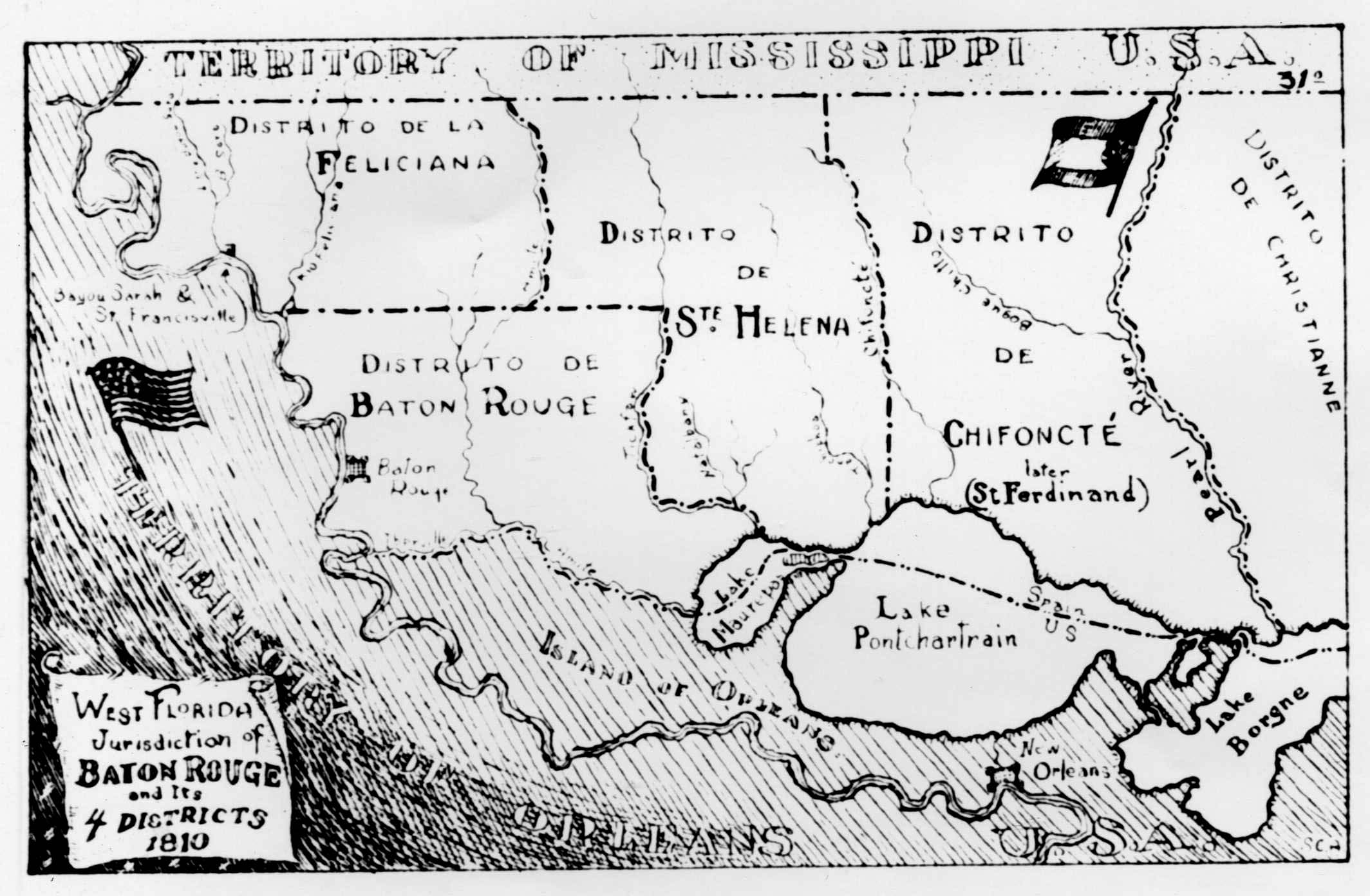
A draft of my 'Entangled up in Red, White, and Blue: Spanish West Florida and the American Territory of Orleans, 1803-1810' is available here and will soon be available here.  


The piece has been accepted for Thomas Duve (ed.), Entanglements in Legal History: Conceptual Approaches to Legal History, Global Perspective on Legal History vol. 1, Max Planck Institute for European Legal History Open Access Publication, 2013.

The abstract reads:


This article is a preliminary case study of legal and normative entanglement in Spanish West Florida—which stretched across the Gulf Coast of present-day Louisiana, Mississippi, Alabama, and Florida—between 1803-1810. Between the time of the Louisiana Purchase (1803) and the annexation of Westernmost part of West Florida by the United States (1810), the laws and norms of the Territory criss-crossed in various ways those of Spain and the United States. Indeed, the territory was, in turn, French, British, and Spanish before being annexed, in part, by the Americans. For the period under study here, and decades before, its settlers were largely Anglophone, while its laws were a variant of the Spanish colonial ius commune. West Florida had an especially close relationship with the area that would become the new American Territory of Orleans (1805), especially the city of New Orleans. Carved out of the vast Louisiana Territory purchased from France, the Territory of Orleans had its own complex history. Its population was still largely Francophone. In its first decade, its laws were already a gumbo of continental and Anglo-American ingredients. Together, the two territories sat at the precipice of the modern nation-state, of nationalism and popular sovereignty, of legal positivism and legal formalism. In both territories, the diffusion—direct and indirect, formal and informal, ongoing and sporadic—of the various laws and norms of natives and newcomers created intricate legal and normative hybrids.   

I'd welcome your thoughts and corrections.

21 February 2013

BOOKS: Bell and Ibbetson on Comparative Studies in the Development of the Law of Torts in Europe


This three-volume set contains the results of the second and final stage of an AHRC-funded project which aims to examine the nature of legal development in Western Europe since 1850, focusing on liability for fault. 

By bringing together experts with different disciplinary backgrounds – comparative lawyers and legal historians, all with an understanding of modern tort law in their own systems – and getting them to work collaboratively, the books produce a more nuanced comparative legal history and one which is theoretically better informed. 

Also available, the six-volume set containing the results of the first stage of this project.

Very highly recommended. SPD

BOOKS: The Routledge Catalogue

Right-click here to download pictures. To help protect your privacy, Outlook prevented automatic download of this picture from the Internet.
Routledge's new Research in Law and Law & Society online catalogue is now available. 

Click on the links below to view the latest titles in your area of interest.

 Research in Law and Law & Society

New and Key Titles 2013

Subjects and Series include:

20 February 2013

BOOK: Arbitration in China: A Legal and Cultural Analysis


In the context of harmonisation of arbitration law and practice worldwide, to what extent do local legal traditions still influence local arbitration practices, especially at a time when non-Western countries are playing an increasingly important role in international commercial and financial markets? How are the new economic powers reacting to the trend towards harmonisation? China provides a good case study, with its historic tradition of non-confrontational means of dispute resolution now confronting current trends in transnational arbitration. Is China showing signs of adapting to the current trend of transnational arbitration? On the other hand, will Chinese legal culture influence the practice of arbitration in the rest of the world? 

To address these challenging questions it is necessary to examine the development of arbitration in the context of China's changing cultural and legal structures. Written for international business people, lawyers, academics and students, this book gives the reader a unique insight into arbitration practice in China, based on a combination of theoretical analysis and practical insights. It explains contemporary arbitration in China from an interdisciplinary perspective and with a comparative approach, setting Chinese arbitration in its wider social context to aid understanding of its history, contemporary practice, the legal obstacles to modern arbitration, and possible future trends.

In 2011 the thesis on which this book was based was named 'Best Thesis in International Studies' by the Swiss Network for International Studies.

“What distinguishes this work from other books on international arbitration is its interdisciplinary perspective and comparative approach...this book makes a remarkable contribution to the understanding of arbitration in China and transnational arbitration in general. Academics, scholars and students of international arbitration, comparative studies and globalisation may all find this book stimulating. It also provides useful guidance for practitioners involved or interested in arbitration in China.”
From the Foreword by Gabrielle Kaufmann-Kohler


Kun Fan is Assistant Professor at the Faculty of Law, Chinese University of Hong Kong and Visiting Scholar at the Harvard Yenching Institute, Harvard University. She received her PhD (summa cum laude) from Geneva University. She is a former Deputy Counsel of the ICC International Court of Arbitration and now practises as a Senior Consultant for Arbitration Asia. She is called to the New York Bar, is a Member of the Chartered Institute of Arbitrators and is an Accredited Mediator and Domain Names Panelist of the Hong Kong International Arbitration Center.

CALL FOR PAPERS: Beyond Responsibility to Protect

Beyond Responsibility to Protect: 
Towards Responsible Use of International Law?

University of Hull Law School

McCoubrey Centre for International Law4- 5 July 2013, Hull, UK

Keynote Speaker: Professor Andre Nollkaemper, Professor of International Law, University of Amsterdam

The McCoubrey Centre for International Law is hosting a two-day conference for research students and early career scholars. The theme of the conference is "Beyond Responsibility to Protect: Towards Responsible Use of International Law?"

OVERVIEW: The key idea is that international law increasingly requires states not only to abstain from breaking the law, but also to pro-actively protect common interests or values of the international community. Seen from this perspective, sovereignty is not merely about rights, but also (perhaps, primarily) about duties; in particular, that States have a responsibility to take steps to prevent breaches of international law, especially the commission of heinous crimes.

CALL FOR PAPERS: Law, Culture, Critique

2013 Osgoode Forum - Law, Culture, Critique

May 10-12, 2013 


Osgoode Hall Law School, Toronto, Canada Conference
Website: http://glsa.osgoode.yorku.ca

Shelley wrote that 'poets are the unacknowledged legislators of the world'. We want to engage with the deeper aspect of Shelley's claim, which is that law is culturally pervasive; as Gramsci noted, every person is an intellectual and a 'legislator.' Legal scholars can learn from this wider ambit of law where these 'legislators' practise art, activism and critical analysis. Thus the two main themes of this conference are the intersections between law and culture and the role of critique in legal scholarship. The ubiquity of law is captured in cultural manifestations, whether it is narratology, rhetoric or aesthetics. It is the ideological function of the law which is reflected by cultural practices; law has been used to suppress, shape and create culture in all its forms - such as art, music, literature and media. We are inspired by 'law and literature' scholars who have pioneered its study by questioning how law and text inform one another. We would like to extend their emphasis on law's role in shaping knowledge to other intersections of law and culture - from intellectual property rights and artistic expression to environmental law and indigenous knowledge to the privatization of space and graffiti art.

ANNOUNCEMENT: Migration Policies and Legal Transplants in the Mediterranean Area Research Project


The Project is funded by the Italian Ministry of University and Research and aims to reconstruct - from an interdisciplinary and comparative perspective - the migration policies and transplantation of legal models and subjects in the Mediterranean Area from the mid-nineteenth century to the present.

In this work, the legal and historical approach of the universities of Lecce (Eliana Augusti), Ferrara (Michele Pifferi) and Napoli (Fulvio Maria Palombino) will be complimented and enriched by surveys on Africa (with a post-colonial approach) of the University of Pavia (Antoniomaria Morone).

The foreign partners of the Project are: the University of Limerick (Seán Patrick Donlan), the University of Malta (David E. Zammit) and the Équipe Poitevine de Recherce et d'Encadrement Doctoral en Sciences Criminelles (EPRED) of Poitiers.

MEMBERSHIP: More Payment Options

We've added another payment option for membership. In addition to PayPal and Cheques and Bank Drafts, we've also made Bank Transfers possible. 

For information on membership, see here.

The Payment Options now include:

19 February 2013

BOOK: The Maltese Legal System

Book_Launh-_The_Malta_Legal_System

JOURNAL: Ultima Ratio, a Principle at Risk

Ultima Ratio, a principle at risk. European PerspectivesVol 3, No 1 (2013) of the Oñati Socio-Legal Series is available.

Its theme is:

Ultima Ratio, a principle at risk. European Perspectives

Issue edited by Joxerramon Bengoetxea (University of the Basque Country), Heike Jung (Saarland University) and Kimmo Nuotio (University of Helsinki)

Papers resulting from the workshop Ultima Ratio. Is the General Principle at Risk in our European Context? held in Oñati on 2nd - 4th February 2012.