(Subjects: Comparative Law; contract law)
10 March 2018
Formation and Third Party Beneficiaries
(Subjects: Comparative Law; contract law)
Legalism: Property and Ownership
Edited by Georgy Kantor, Tom Lambert, and Hannah Skoda
Legalism
- Brings together anthropologists and historians to examine how property and ownership operate and are understood across broad historical and geographical contexts
- Offers a truly cross-cultural perspective, and makes specialist case studies visible and accessible to non-specialists
- Partakes in a larger intellectual debate developed across disciplines - from anthropology to history to legal theory
- (Subjects: comparative law; anthropology; history; property; ownership)
A Theory of Legitimate Expectations for Public Administration
Author: Alexander Brown
- Presents a new theory of legitimate expectation for public administration, arguing that agencies should be held liable for losses they directly cause by creating and then frustrating legitimate expectations. Draws on normative legal and political theory to evaluate the ethics of legal doctrine and whether this is primarily an issue of fairness, security, trust in government, or something else.
Compares and contrasts examples drawn from the UK, Ireland, Europe, Australia, New Zealand, and South Africa.
- (Subject: Public Administration)
Competition Policy for the New Era Insights from the BRICS Countries

Competition Policy for the New Era. Insights from the BRICS Countries
Edited by Tembinkosi Bonakele, Eleanor Fox, and Liberty Mncube
- Written by well-known academic and practising economists and lawyers from both developed and developing countries. Focuses on a broader view of competition policy in BRICS and developing countries, including concepts such as efficiency and consumer welfare, issues of distribution, equity, and fairness. Each chapter is organized around a central argument made by its author(s) in relation to issue or case study, making every contribution a valuable freestanding contribution to the literature. Provides a number of viewpoints of what competition law and policy mean both in theory and practice in a development context through the use of insightful case studies. (Subjects: Competition Law; Comparative Competition Law)
Mediterranean Contaminations
The Mediterranean is a sea that has experienced extraordinary contacts, conflicts, encounters and exchanges through the centuries. This complexity is analysed in the present volume through the eyes of twelve scholars specialised in Middle Eastern and North African studies.
Arabic and Semitic linguistics and dialectology, Arab literature and popular music and culture are some of the broad range of subjects included in this volume which engages different geographical areas of the so-called Mare Nostrum and various historical periods, from the medieval to the contemporary era.
(Subjects: Arabic and Semitic linguistics and dialectology, Arab literature, popular music and culture)
03 March 2018
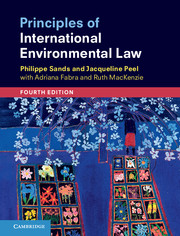
Principles of International Environmental Law (4th ed.)
Principles of International Environmental Law
4th edition
This new and fully updated edition of Principles of International Environmental Law offers a comprehensive and critical account of one of the fastest growing areas of international law: the principles and rules relating to environmental protection. Introducing the reader to the key foundational principles, governance structures and regulatory techniques, Principles of International Environmental Law explores each of the major areas of international environmental regulation through substantive chapters, including climate change, atmospheric protection, oceans and freshwater, biodiversity, chemicals and waste regulation. The ever-increasing overlap with other areas of international law is also explored through examination of the inter-linkages between international environmental law and other areas of international regulation, such as trade, human rights, humanitarian law and investment law. Incorporating the latest developments in treaty and case law for key areas of environmental regulation, this text is an essential reference and textbook for advanced undergraduate and postgraduate students, academics and practitioners of international environmental law.
Reviews & endorsements
Advance praise:
'Principles of International Environmental Law remains the definitive treatise on this vitally important area of international law. The international community faces unprecedented environmental challenges and this work provides a comprehensive assessment of the capacity of environmental norms and institutions to address these threats. The work is an essential reference for anyone interested in the role of international law in preserving a safe operating space for humanity and the environmental systems we depend on in the Anthropocene.'
Tim Stephens, University of Sydney Law School
Read more at http://www.cambridge.org/ca/academic/subjects/law/environmental-law/principles-international-environmental-law-4th-edition#AjckbW1j2MPJODBw.99
This new and fully updated edition of Principles of International Environmental Law offers a comprehensive and critical account of one of the fastest growing areas of international law: the principles and rules relating to environmental protection. Introducing the reader to the key foundational principles, governance structures and regulatory techniques, Principles of International Environmental Law explores each of the major areas of international environmental regulation through substantive chapters, including climate change, atmospheric protection, oceans and freshwater, biodiversity, chemicals and waste regulation. The ever-increasing overlap with other areas of international law is also explored through examination of the inter-linkages between international environmental law and other areas of international regulation, such as trade, human rights, humanitarian law and investment law. Incorporating the latest developments in treaty and case law for key areas of environmental regulation, this text is an essential reference and textbook for advanced undergraduate and postgraduate students, academics and practitioners of international environmental law.Reviews & endorsements
Advance praise: 'Principles of International Environmental Law remains the definitive treatise on this vitally important area of international law. The international community faces unprecedented environmental challenges and this work provides a comprehensive assessment of the capacity of environmental norms and institutions to address these threats. The work is an essential reference for anyone interested in the role of international law in preserving a safe operating space for humanity and the environmental systems we depend on in the Anthropocene.' Tim Stephens, University of Sydney Law School
Read more at http://www.cambridge.org/ca/academic/subjects/law/environmental-law/principles-international-environmental-law-4th-edition#AjckbW1j2MPJODBw.99
This new and fully updated edition of Principles of International Environmental Law offers a comprehensive and critical account of one of the fastest growing areas of international law: the principles and rules relating to environmental protection. Introducing the reader to the key foundational principles, governance structures and regulatory techniques, Principles of International Environmental Law explores each of the major areas of international environmental regulation through substantive chapters, including climate change, atmospheric protection, oceans and freshwater, biodiversity, chemicals and waste regulation. The ever-increasing overlap with other areas of international law is also explored through examination of the inter-linkages between international environmental law and other areas of international regulation, such as trade, human rights, humanitarian law and investment law. Incorporating the latest developments in treaty and case law for key areas of environmental regulation, this text is an essential reference and textbook for advanced undergraduate and postgraduate students, academics and practitioners of international environmental law.
- The leading textbook in an area of growing importance and complexity, Principles of International Environmental Law is an essential guide for students and practitioners of international environmental law
- Contains a new chapter on climate change addressing the significant developments in the field, including the Paris Climate Agreement
- Presents critical commentary on some of the world's most pressing and growing problems including climate change, biodiversity and regulating pollution and waste
- Looks at the contribution made by different groups - governments, courts and non-state actors - for a full understanding of the protagonists involved
Read more at http://www.cambridge.org/ca/academic/subjects/law/environmental-law/principles-international-environmental-law-4th-edition#ev5YCtYatZyF1Rzw.99
Authors: Philippe Sands, University College London; Jacqueline Peel, University of Melbourne
This new and fully updated edition of Principles of International Environmental Law offers a comprehensive and critical account of one of the fastest growing areas of international law: the principles and rules relating to environmental protection. Introducing the reader to the key foundational principles, governance structures and regulatory techniques, Principles of International Environmental Law explores each of the major areas of international environmental regulation through substantive chapters, including climate change, atmospheric protection, oceans and freshwater, biodiversity, chemicals and waste regulation. The ever-increasing overlap with other areas of international law is also explored through examination of the inter-linkages between international environmental law and other areas of international regulation, such as trade, human rights, humanitarian law and investment law. Incorporating the latest developments in treaty and case law for key areas of environmental regulation, this text is an essential reference and textbook for advanced undergraduate and postgraduate students, academics and practitioners of international environmental law.
- The leading textbook in an area of growing importance and complexity, Principles of International Environmental Law is an essential guide for students and practitioners of international environmental law
- Contains a new chapter on climate change addressing the significant developments in the field, including the Paris Climate Agreement
- Presents critical commentary on some of the world's most pressing and growing problems including climate change, biodiversity and regulating pollution and waste
- Looks at the contribution made by different groups - governments, courts and non-state actors - for a full understanding of the protagonists involved
Read more at http://www.cambridge.org/ca/academic/subjects/law/environmental-law/principles-international-environmental-law-4th-edition#ev5YCtYatZyF1Rzw.99
This new and fully updated edition of
Principles of International Environmental Law offers a comprehensive and
critical account of one of the fastest growing areas of international law: the
principles and rules relating to environmental protection. Introducing the
reader to the key foundational principles, governance structures and regulatory
techniques, Principles of International Environmental Law explores each of the
major areas of international environmental regulation through substantive
chapters, including climate change, atmospheric protection, oceans and
freshwater, biodiversity, chemicals and waste regulation. The ever-increasing
overlap with other areas of international law is also explored through
examination of the inter-linkages between international environmental law and
other areas of international regulation, such as trade, human rights,
humanitarian law and investment law. Incorporating the latest developments in
treaty and case law for key areas of environmental regulation, this text is an
essential reference and textbook for advanced undergraduate and postgraduate
students, academics and practitioners of international environmental law. (Subjects: Comparative Environmental Law; International Environmental Law)
GENOCIDE AND LAW - COMMUNICATING THROUGH VISUAL ARTS AND LANGUAGE
CALL FOR PAPERS
21st International Roundtables for the Semiotics of Law & 15th Conference on Legal
Translation and Interpreting and Comparative Legilinguistics (Legal Linguistics)
GENOCIDE AND LAW – COMMUNICATING THROUGH
VISUAL ARTS AND LANGUAGE
Conference venue:
26th to 28th June (Friday-Sunday) 2020
Poznan, Poland
Conference website: www.lingualegis.amu.edu.pl
Languages: Polish, English, French, Spanish, Russian and German
01 February 2018
Cross-border Transfer and Collateralisation of Receivables
A Comparative Analysis of Multiple Legal Systems
By Woo-jung Jon
Legal systems around the world vary widely in terms of how they deal with the assignment of, and security interests in, receivables. The aim of this book is to help international financiers and practicing lawyers in relevant markets in their practice of international receivables financing. Substantively, this book analyzes three types of receivables financing transactions: outright assignment (transfer), security assignment, and security interests. This book covers comprehensive comparison and analysis of the laws on the assignment of, and security interests in, receivables of fifteen major jurisdictions, encompassing common law jurisdictions, Roman-Germanic jurisdictions, and French-Napoleonic jurisdictions, as well as relevant EU Directives. To be more specific, this book compares and analyzes the relevant legal systems of the US, Canada, New Zealand, Australia, Korea, Japan, France, Belgium, England, Hong Kong, Singapore, China, Germany, Austria, the Netherlands, and the EU Directive on financial collateral arrangements. Furthermore, in order to analyze those legal systems from the international perspective, this book compares relevant international conventions. In addition, this book proposes to establish an international registration system for the assignment of, and security interests in, receivables. Revised Dissertation. [Subject: Banking & Finance Law, Contract Law, Tort Law, Comparative Law, Asian Law]
Revolution and Evolution in Private Law
The development of private law across the common law world is typically portrayed as a series of incremental steps, each one delivered as a result of judges dealing with marginally different factual circumstances presented to them for determination. This is said to be the common law method. According to this process, change might be assumed to be gradual, almost imperceptible. If this were true, however, then even Darwinian-style evolution-death of the dinosaurs or development of flight-would seem unlikely in the law, and radical and revolutionary paradigms shifts perhaps impossible. And yet the history of the common law is to the contrary. The legal landscape is littered with quite remarkable revolutionary and evolutionary changes in the shape of the common law. The essays in this volume explore some of the highlights in this fascinating revolutionary and evolutionary development of the common law. The authors expose the nature of the changes undergone and their significance for the future direction of travel. They identify the circumstances and the contexts which might have provided an impetus for these significant changes. The essays range across all areas of private law, including contract, tort, unjust enrichment, and property. No area has been immune from development. That fact itself is unsurprising, but an extended examination of the particular circumstances and contexts which delivered some of private law's most important developments has its own special significance for what it might indicate about the shape, and the shaping, of private law regimes in the future. [Subject: Private Law, Contract Law, Tort Law, Equity & Trusts, Comparative Law, Property Law, Common Law]
The Constitution of Pakistan
A Contextual Analysis
This volume provides a contextual account of Pakistan's constitutional laws and history. It aims to describe the formal structure of government in reference to origins that are traced to the administrative centralization and legal innovations of colonial rule. It also situates the tide of Muslim nationalism that gave rise to the nation of Pakistan within a terrain of nascent constitutionalism and its associated promises of representation. The post-colonial history of the Pakistani state is charted by reference to succeeding constitutions and the distribution of powers between the major branches of government that they augured. Where conventional histories often suggest that constitutionalism in Pakistan is to be solely understood by reference to a cycle of abidance and rupture, and in the oscillation between military and civilian rule, this volume also accounts for the many points of continuity between regime types. The contours of a broader constitutionalism come to light in the ways in which state power is wielded at different periods and in the range of contests-economic, political and cultural-through which some of this power is sought to be dispersed. Chapters on Rights, Federalism, and Islam detail the contextual features of some of these contests and the normative, legal parameters through which they are provisionally settled. (Series: Constitutional Systems of the World) [Subject: Pakistani Law, Constitutional Law, Comparative Law, Human Rights Law]
By Sadaf Aziz
This volume provides a contextual account of Pakistan's constitutional laws and history. It aims to describe the formal structure of government in reference to origins that are traced to the administrative centralization and legal innovations of colonial rule. It also situates the tide of Muslim nationalism that gave rise to the nation of Pakistan within a terrain of nascent constitutionalism and its associated promises of representation. The post-colonial history of the Pakistani state is charted by reference to succeeding constitutions and the distribution of powers between the major branches of government that they augured. Where conventional histories often suggest that constitutionalism in Pakistan is to be solely understood by reference to a cycle of abidance and rupture, and in the oscillation between military and civilian rule, this volume also accounts for the many points of continuity between regime types. The contours of a broader constitutionalism come to light in the ways in which state power is wielded at different periods and in the range of contests-economic, political and cultural-through which some of this power is sought to be dispersed. Chapters on Rights, Federalism, and Islam detail the contextual features of some of these contests and the normative, legal parameters through which they are provisionally settled. (Series: Constitutional Systems of the World) [Subject: Pakistani Law, Constitutional Law, Comparative Law, Human Rights Law]
Subscribe to:
Posts (Atom)