10 December 2011

CALL FOR PAPERS: Fifth Annual International Junior Faculty Forum

Stanford Law School and Harvard Law School have established an International junior Faculty Forum. The purpose is stimulate the exchange of ideas and research, among younger scholars in the academy, from all parts of the world. We live today in a global community– in particular, a global legal community – and we would like to foster legal scholarship on a transnational basis. Scholars in different countries are often divided by barriers of time and space and also by barriers of different legal traditions and cultures. We hope that the Forum will be a step in the direction of surmounting these barriers. The papers at the 2011 forum were on a very wide range of subjects, from street law in Mexico City, to social justice in intellectual property law, to young people’s perceptions about war crimes trials in Bosnia, and the art and law of macroeconomics. The authors of these papers came from many countries, as did the senior scholars who chose the papers and commented on them. A wide range of views, techniques, and methodologies were represented.
The sponsors, Harvard and Stanford Law Schools, are pleased to announce plans for the fifth international forum. It will be held in fall, 2012, either in October or November (the exact date has not yet been fixed). It will take place at Stanford Law School, in Stanford, California.

In order to be considered for the 2012 International Junior Faculty Forum, authors must meet the following criteria:

- Citizen of a country other than the United States
- Home academic institution is outside of the United States
- Have held a faculty position or the equivalent, including positions comparable to junior faculty positions in research institutions, for less than seven years as of 2012; and
- Last degree earned less than ten years before 2012

CALL FOR PAPERS: Justice Studies Association Conference

The Justice Studies Association seeks presentations for its 14th Annual Conference, May 30-June 1, 2012, Loyola University Chicago (Lake Shore Campus, Rogers Park). The Conference theme is “Justice and Work.” Possible topics for presentation include:

—How the distribution of and compensation for work affects the quality of life and development of persons, families, communities, and societies
—The just distribution of work in the family and school
—Immigration and work and societal responses to "illegal" work
—Gender, race, class, sexual orientation, and political ideology in the workplace
—Cooperation, mutual aid, collaboration, and shared decision-making in work situations and their salutary effect on personal and collective well-being
—Historical and contemporary struggles over collective bargaining and unions (e. g. the Pullman Strike of 1894 and recent corporate and governmental incursions into unions in the United States)
—Having a "Calling in Life" or "Life's Work" as opposed to a career
—Philosophies of work and employment especially those that promote freedom from work
—Labor in prison settings such as correctional institutions and internment camps
—Separation of work from healthful living in contemporary society
—Utopian visions of work in literature, film, and communal living arrangements

CALL FOR PROPOSALS: Sensing the Law

Sensing the Law

The Canadian Initiative in Law, Culture, and Humanities (CILCH) is calling for contributi
ons to an interdisciplinary edited collection on law and the senses. The book will emerge from a collaborative process that includes a workshop meeting of all authors in February 2013.

Sensing the Law addresses the numerous interfaces between law and the senses. While law is often presented as disembodied and abstract, the senses refer to the embodied, messy, and fleeting qualities of human life. The collection asks not only how law makes sense of the senses, but also how law is made sense of through vocabularies of sensory perception. The senses are mobilized in relationship to legal institutions in a variety of ways: as metaphors, embodied realities, sources of evidence and institutional rationalities. Yet, the senses seem to exceed and confound law in a number of ways.

01 December 2011

NOTICE: Husa and Smits on Comparative Functionalism

The following 'Dialogue on Comparative Functionalism' between (member) Jaakko Husa and Jan Smits may be of interest:

The use of the functional method when comparing legal systems remains debated, even to such an extent that some authors have discarded functionalism as a fruitful method. The two authors of this paper ask what we can still expect from functionalism. While Husa presents an argument in favor of rule-of-thumb functionalism, Smits claims that functionalism has a bright future if it is reshaped. The authors present their arguments by way of a dialogue that was written for the ‘Legal debates’-section of the Maastricht Journal of European and Comparative Law.

Members would do well to look at the authors' other publications on SSRN.

CORRECTION: Entanglements in Legal History: Conceptual Approaches to Global Legal History

Note that the deadline for Call for Papers for papers for contributions on the Entanglements in Legal History: Conceptual Approaches to Global Legal History, to be held at the 39th Rechtshistorikertag (Conference of Legal Historians) in Lucerne (2-6 September 2012) and the Max Planck Institute for European Legal History in Frankfurt am Main (the week of 20 August 2012), is 15 December 2011 (rather than 1 December 2011 as the original notice stated).


30 November 2011

CALL FOR PAPERS: International Association of Legal Methodology Conference on 'Transparency: a principle of governance'

Twelfth Conference of the International Association of Legal Methodology
Douzième Congrès de l’Association Internationale de Méthodologie Juridique

Transparency: a principle of governance
La transparence, principe de gouvernance

Thursday 1st – Friday 2nd November 2012
Jeudi 1er – Vendredi 2 Novembre 2012

Loyola University New Orleans College of Law


CALL FOR PAPERS
APPEL À CONTRIBUTIONS

Transparency, a principle of governance

Transparency is dealt with as a principle of governance, whether governance takes on a unilateral or a contractual mode. With regard to the unilateral form of governance, transparency of course impacts the act of governance itself, whether it is a legislative act, a regulation, or a judicial act. Where governance proceeds contractually, transparency remains a governing principle of the award procedure of public contracts. Lastly, the contractual mode of governance may consist in the carving out of a sphere reserved for the contractual autonomy of private actors. However, in this case, state self-restraint does not amount to absolute state abstention. In reality, the state regulates the exercise of contractual freedom. Thus, within this private contractual sphere, transparency remains a requirement as well.

La transparence, principe de gouvernance

La transparence est appréhendée comme un principe directeur de la gouvernance que celle-ci emprunte un mode unilatéral ou un mode contractuel. S’agissant de la forme unilatérale de la gouvernance, la transparence empreint évidemment l’acte de gouvernance lui-même que celui-ci soit acte législatif, acte réglementaire ou acte juridictionnel. Lorsque la gouvernance préfère la forme contractuelle, la transparence n’en demeure pas moins une règle de la contractualisation de l’action publique. Enfin, le mode contractuel de la gouvernance peut consister en l’aménagement d’une sphère réservée à l’autonomie contractuelle des acteurs privés. Mais alors que l’Etat dans cette hypothèse choisit une position de retrait, il ne se fige pas pour autant dans l’abstention. En réalité, il encadre l’exercice de la liberté contractuelle. À ce titre, l’exigence de transparence trouve une autre occasion de se déployer.

Paper proposals should be sent by 20 December 2011 to the two following email addresses:

Professor Dominique Custos : dcustos@loyno.edu
Professor Jean-Yves Chérot : j-y.cherot@univ-cezanne.fr

The topic box of your email should read 'AIMJ-IALM Congres 2012-2012 Congress'. The list of selected papers will be communicated on 15 February 2012.

28 November 2011

NOTICE: Janke and Licari on Contra Non Valentem Agere Non Currit Praescriptio

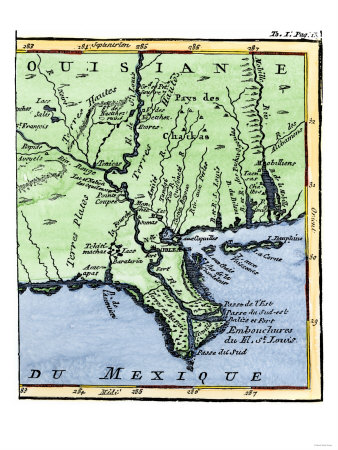
Benjamin West Janke (Baker, Donelson, Bearman, Caldwell & Berkowitz, PC) and Juris Diversitas member François-Xavier Licari (University of Metz - Faculty of Law) have published 'Des rives de la Seine à celles du Mississipi: le fabuleux destin de la maxime contra non valentem agere non currit praescriptio' ('From the Banks of the Seine to Those of Mississipi: The Fabulous Destiny of the Maxim "Contra Non Valentem Agere Non Currit Praescriptio"') will be published in the (2011) 63 Revue Internationale de Droit Comparé 809; it is already available (in French) on SSRN through the link above.

The abstract reads:

La relation entre la France et la Louisiane ne se limite pas au droit légiféré. Elle se manifeste aussi en ce qui concerne un important principe non écrit du droit de la prescription: "contra non valentem agere non currit praescriptio". En ce domaine, la parenté juridique est étroite. En Louisiane, "contra non valentem" est le fruit de la doctrine et de la jurisprudence françaises. Nous mettrons aussi en lumière la similarité notable entre le destin de la maxime en France et en Louisiane. Dans ces deux pays, les tribunaux l’ont déclarée morte, mais malgré l’hostilité à laquelle elle a été confrontée, elle est devenue une pièce majeure de l’institution de la prescription. En dernier lieu, nous briserons le mythe bien enraciné selon lequel contra non valentem ne s’applique pas en droit louisianais de la prescription acquisitive, révélant ainsi une autre convergence de taille entre la France et la Louisiane.

The relationship between Louisiana and France is not limited to written law. It also exists in one important extra-codal principle of prescription law: "contra non valentem agere non currit praescriptio". In this regard, the juridical parenthood is tight. We will show that "contra non valentem" in Louisiana is the fruit of French doctrine and jurisprudence. Furthermore, we will bring to light the noticeable similarity of the maxim’s fate in France and Louisiana. Courts in both jurisdictions proclaimed it as dead, but despite the antagonism it faced, contra non valentem evolved as a major component of prescription’s institution. Finally, we will dispel a deep-rooted myth that contra non valentem does not apply to the domain of acquisitive prescription and reveal another strong convergence between Louisiana and France.

Note that this article is the French version of Janke and Licari, 'Contra Non Valentem in France and Louisiana: Revealing the Parenthood, Breaking a Myth' (2010) 71 Louisiana Law Review 503.

NOTICE: Les Grandes Etapes de la Pensee Anthropologique sur le Droit Conference

LES GRANDES ETAPES DE LA PENSEE
ANTHROPOLOGIQUE SUR LE DROI


Première rencontre d’anthropologie du droit de l’Ecole de droit de Sciences Po

13 JANVIER 2012
Salle Georges Lavau
CEVIPOF - 98 rue de l’Université 75007


L’idée de ce colloque est de mettre en lumière la portée anthropologique de l’œuvre de certains auteurs et d’en déterminer l’apport pour l’intelligence du droit. La recherche est ainsi faite que la collecte de données ethnographiques n’existe jamais pour elle-même et que partout et toujours elle est déterminée par des représentations qui constituent déjà une mise en ordre du réel. C’est dans la mesure où la dynamique de l’intelligence de la part juridique de l’humain passe par la projection de conceptions préalables que certains auteurs et certaines pensées jouent un rôle cognitif concret dans la production des connaissances. Ces premières rencontres seront consacrées à un certain nombre d’auteurs et de thèmes considérés pour leur rôle déterminant dans la vie de la pensée.

NOTICE: L’Independence des Avocats Conference

JOURNEE D’ÉTUDE DE L’ÉCOLE DE DROIT DE SCIENCES PO

AVEC LA COLLABORATION DU CONSEIL NATIONAL DES BARREAUX


L’INDEPENDANCE DES AVOCATS
HISTOIRES, SENS ET TENDANCES
UNE COMPARAISON ENTRE LA FRANCE ET LES ÉTATS-UNIS

30 NOVEMBRE 2011
Salle Georges Lavau
CEVIPOF - 98 rue de l’Université 75007
(9H00-17H00)


Depuis le fameux discours d’Henri-François d’Aguesseau en 1693, l’indépendance de l’avocat est de tous les débats sur la profession, peut-être parce qu’elle en est la raison d’être et le facteur distinctif en regard des autres professions juridiques. Quelles en sont les sources ? Quelles en sont les conditions ? Quelle en est l’étendue ? Récemment, David Wilkins a insisté sur le fait que plus elle adhère au marché des services juridiques et moins la profession est indépendante. Peut-on considérer que c’est lorsqu’elle accompagne, souvent de façon décisive, l’économie marchande que la profession d’avocat se fragilise et qu’elle s’expose au risque souverain de cesser de ne pas dépendre de quelque pouvoir que ce soit, ce qui l’amènerait à terme à cesser d’être à même de servir le droit ?

NOTICE: Assier-Andrieu on advocates and anthropology

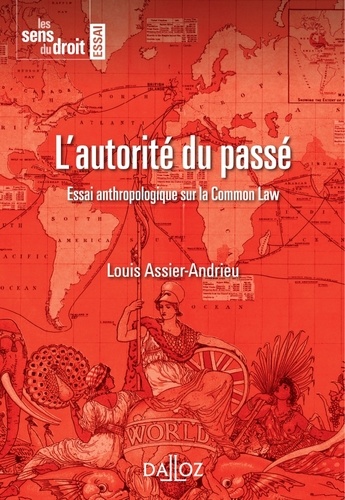
 One of our members, Louis Assier-Andrieu (Research Director at CNRS (Centre for European Studies at Sciences Po) and professor in the School of Law, Sciences Po), has just published two interesting books: