28 November 2011

NOTICE: Janke and Licari on Contra Non Valentem Agere Non Currit Praescriptio

Benjamin West Janke (Baker, Donelson, Bearman, Caldwell & Berkowitz, PC) and Juris Diversitas member François-Xavier Licari (University of Metz - Faculty of Law) have published 'Des rives de la Seine à celles du Mississipi: le fabuleux destin de la maxime contra non valentem agere non currit praescriptio' ('From the Banks of the Seine to Those of Mississipi: The Fabulous Destiny of the Maxim "Contra Non Valentem Agere Non Currit Praescriptio"') will be published in the (2011) 63 Revue Internationale de Droit Comparé 809; it is already available (in French) on SSRN through the link above.

The abstract reads:

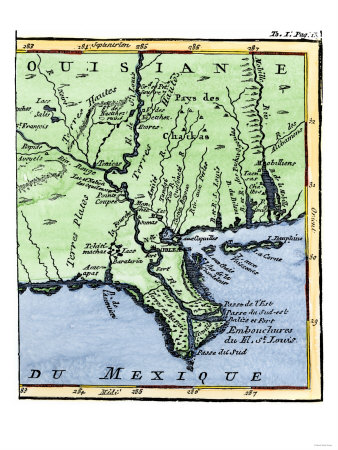
La relation entre la France et la Louisiane ne se limite pas au droit légiféré. Elle se manifeste aussi en ce qui concerne un important principe non écrit du droit de la prescription: "contra non valentem agere non currit praescriptio". En ce domaine, la parenté juridique est étroite. En Louisiane, "contra non valentem" est le fruit de la doctrine et de la jurisprudence françaises. Nous mettrons aussi en lumière la similarité notable entre le destin de la maxime en France et en Louisiane. Dans ces deux pays, les tribunaux l’ont déclarée morte, mais malgré l’hostilité à laquelle elle a été confrontée, elle est devenue une pièce majeure de l’institution de la prescription. En dernier lieu, nous briserons le mythe bien enraciné selon lequel contra non valentem ne s’applique pas en droit louisianais de la prescription acquisitive, révélant ainsi une autre convergence de taille entre la France et la Louisiane.

The relationship between Louisiana and France is not limited to written law. It also exists in one important extra-codal principle of prescription law: "contra non valentem agere non currit praescriptio". In this regard, the juridical parenthood is tight. We will show that "contra non valentem" in Louisiana is the fruit of French doctrine and jurisprudence. Furthermore, we will bring to light the noticeable similarity of the maxim’s fate in France and Louisiana. Courts in both jurisdictions proclaimed it as dead, but despite the antagonism it faced, contra non valentem evolved as a major component of prescription’s institution. Finally, we will dispel a deep-rooted myth that contra non valentem does not apply to the domain of acquisitive prescription and reveal another strong convergence between Louisiana and France.

Note that this article is the French version of Janke and Licari, 'Contra Non Valentem in France and Louisiana: Revealing the Parenthood, Breaking a Myth' (2010) 71 Louisiana Law Review 503.
NOTICE: Les Grandes Etapes de la Pensee Anthropologique sur le Droit Conference

LES GRANDES ETAPES DE LA PENSEE
ANTHROPOLOGIQUE SUR LE DROI


Première rencontre d’anthropologie du droit de l’Ecole de droit de Sciences Po

13 JANVIER 2012
Salle Georges Lavau
CEVIPOF - 98 rue de l’Université 75007


L’idée de ce colloque est de mettre en lumière la portée anthropologique de l’œuvre de certains auteurs et d’en déterminer l’apport pour l’intelligence du droit. La recherche est ainsi faite que la collecte de données ethnographiques n’existe jamais pour elle-même et que partout et toujours elle est déterminée par des représentations qui constituent déjà une mise en ordre du réel. C’est dans la mesure où la dynamique de l’intelligence de la part juridique de l’humain passe par la projection de conceptions préalables que certains auteurs et certaines pensées jouent un rôle cognitif concret dans la production des connaissances. Ces premières rencontres seront consacrées à un certain nombre d’auteurs et de thèmes considérés pour leur rôle déterminant dans la vie de la pensée.

NOTICE: L’Independence des Avocats Conference

JOURNEE D’ÉTUDE DE L’ÉCOLE DE DROIT DE SCIENCES PO

AVEC LA COLLABORATION DU CONSEIL NATIONAL DES BARREAUX


L’INDEPENDANCE DES AVOCATS
HISTOIRES, SENS ET TENDANCES
UNE COMPARAISON ENTRE LA FRANCE ET LES ÉTATS-UNIS

30 NOVEMBRE 2011
Salle Georges Lavau
CEVIPOF - 98 rue de l’Université 75007
(9H00-17H00)


Depuis le fameux discours d’Henri-François d’Aguesseau en 1693, l’indépendance de l’avocat est de tous les débats sur la profession, peut-être parce qu’elle en est la raison d’être et le facteur distinctif en regard des autres professions juridiques. Quelles en sont les sources ? Quelles en sont les conditions ? Quelle en est l’étendue ? Récemment, David Wilkins a insisté sur le fait que plus elle adhère au marché des services juridiques et moins la profession est indépendante. Peut-on considérer que c’est lorsqu’elle accompagne, souvent de façon décisive, l’économie marchande que la profession d’avocat se fragilise et qu’elle s’expose au risque souverain de cesser de ne pas dépendre de quelque pouvoir que ce soit, ce qui l’amènerait à terme à cesser d’être à même de servir le droit ?

NOTICE: Assier-Andrieu on advocates and anthropology

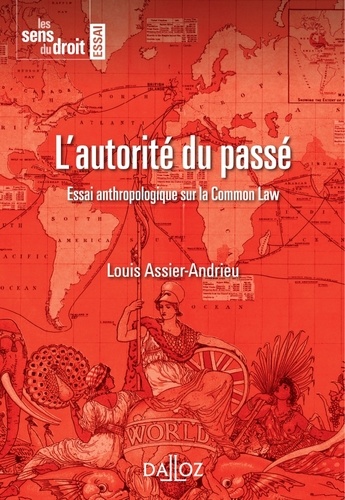
 One of our members, Louis Assier-Andrieu (Research Director at CNRS (Centre for European Studies at Sciences Po) and professor in the School of Law, Sciences Po), has just published two interesting books:


22 November 2011

NOTICE: Congress on 'Constitutionism, Globalization, and the European legal tradition' (University of Enna 'Kore' - 1 December 2011)

A Congress on 'Constitutionism, Globalization, and the European legal tradition' will be held 1 December 2011 at the Università degli Studi di Enna 'Kore' in conjunction with the Ph.D. in Comparative Politics and Law of the Euro-Mediterranean Region programme.

Scholars from Brazil, Italy, Malta, and Spain will take part. Sessions will take place on:

* The hope of globalization, development, and abrupt awakenings
* Open legal systems, the theory of fundamental rights and the European legal tradition
* The constitutional dimension of the European process
* The economic crisis and the crisis of European constitutionality

The Italian text reads:

COSTITUZIONALISMO, GLOBALIZZAZIONE E TRADIZIONE GIURIDICA EUROPEA

21 November 2011

NOTICE: Uzelac and van Rhee on The Landscape of the Legal Professions in Europe and the USA

Intersentia has published another volume in the Ius Commune Europaeum series. A Uzelac and CH van Rhee (eds), The Landscape of the Legal Professions in Europe and the USA: Continuity and Change

The Landscape of the Legal Professions in Europe and the USA: Continuity and Changedeals with recent developments in the legal profession in Europe and in the United States of America from a comparative and historical perspective. Apart from discussing the legal profession in general, specific attention is paid to the Latin Notary, the Advocates, the Rechtspfleger, the State Attorney, court experts, and mediators and arbitrators. Topics addressed include the decline of Big Law in the U.S., the classification of court experts as legal professionals in Italy, the demise of anticompetitive measures in the modern legal services market, as well as the question whether mediators should be classified as ‘new’ legal professionals given the fact that mediation services are currently being offered by many of the ‘old’ legal service providers. The volume concludes with a contribution on the collaboration of various legal professions in providing for the needs of legal practice.

The table of contents includes:

14 November 2011

NOTICE: Transnational Legal Theory

The latest edition of Transnational Legal Theory has just been published.

Articles include:
  • Susan Marks, 'Law and the Production of Superfluity'
  • John McKay, 'Power Dynamics, Social Complexity and the Rule of Law in Development Aid: Why a (Social) Scientific View of Law should Turn our Focus to Power'
  • Filippo Fontanelli, 'Santi Romano and L’ordinamento giuridico: The Relevance of a Forgotten Masterpiece for Contemporary International, Transnational and Global Legal Relations'

NOTICE: Oxford Law and Religion Conference

Oxford Law and Religion Conference
New Frontiers of Protection of Freedom of Religion or Belief Under International Law -
30 Years after the 1981 Declaration on the Elimination of All Forms of Intolerance and of Discrimination Based on Religion or Belief

24 November - Balliol College, Oxford LR 23
10am– 5:30pm


Speakers Include:
  • Heiner Bielefeldt (UN Special Rapporteur on Freedom of or Belief)
  • Malcolm Evans (University of Bristol)
  • Christopher McCrudden (University of Oxford and Queen’s University Belfast)
  • Nazila Ghanea (University of Oxford)
  • Michael Wiener (Office of the High Commissioner for Human Rights)
  • Ronan McCrea (University College London)
Registration: £25
Students and unwaged: Free

Registration enquiries: peter.petkoff@balliol.ox.ac.uk

The Conference is organised by the Oxford Society for Law and Religion, Focus on Freedom of Religion or Belief, School of Law University of Bristol, Law and Religion Research Group Brunel Law School, Religion, Law and International Relations Programme Regent’s Park College, Oxford, Centre for the Study of Religion and Public Life, Kellogg College, Oxford

07 November 2011

NOTICE: The New Frontiers of Comparative Law

I'm pleased to note the following conference, which includes several of our members:

University of Macau
Macau Association of Comparative Law
International Conference
11 November 2011

THE NEW FRONTIERS OF COMPARATIVE LAW

***

9.30 – 9.50 Welcome Speeches
  • Prof. Liu Gaolong, Interim Dean, Faculty of Law of the University of Macau
  • Prof. Paulo Canelas de Castro, Associate Professor of European Union Law, University of Macau, Jean Monnet Chair
  • Prof. Salvatore Mancuso, Associate Professor of Comparative Law, University of Macau; President of the Macau Association of Comparative Law
9.50 Photo group taking

10.00 – 11.15 1st Session: Comparative Law: methodologies and development
Chair: Prof. Salvatore Mancuso, Professor of Comparative Law, University of Macau; President of the Macau Association of Comparative Law
  • Prof. Mauro Bussani, Professor of Comparative Law, University of Trieste, Italy: Comparative Law Beyond the Trap of Western Positivism
  • Prof. Rostam J. Neuwirth, Associate Professor of Law, University of Macau: Law and the Mind: A New Role for Comparative Law?
  • Prof. Sean Donlan, Professor of Comparative Law and Legal History, University Limerick, Ireland: The Ubiquity of Hybridity: Norms and Laws, Past and Present, and Around the Globe
Discussion/Q&A

04 November 2011

CALL FOR PAPERS: Law in Translation

Call for Papers
Law in Translation
Special Issue of The Translator (Volume 20, Number 2, 2014)

Guest-edited by Dr Simone Glanert, Kent Law School, Canterbury, UK

The Translator, a peer-reviewed journal enjoying an international reputation in the field of translation studies, invites contributions for a special issue on Law in Translation to be published as Volume 20, Number 2, 2014.

In an era marked by processes of economic and political integration that are arguably unprecedented in their range and impact, the translation of law, whether understood in its literal or metaphorical sense, has assumed a significance that can hardly be overstated. The following situations are typical. As the expression of a strong postcolonial commitment, various African states have decided to draft their legislation in more than one official language with a view to conferring equal authority to colonial and traditional languages. Elsewhere, an influential group of European lawyers is seeking to develop a civil code for the European Union that stands to be translated in 23 languages. Meanwhile, former political and military leaders are being prosecuted for genocide before the International Criminal Court, a body consisting of judges from many different legal backgrounds and operating according to a complex multilingual procedure. Controversially, the US Supreme Court has relied upon foreign law in order to assess the constitutionality of a Texas statute criminalizing certain forms of sexual behaviour.